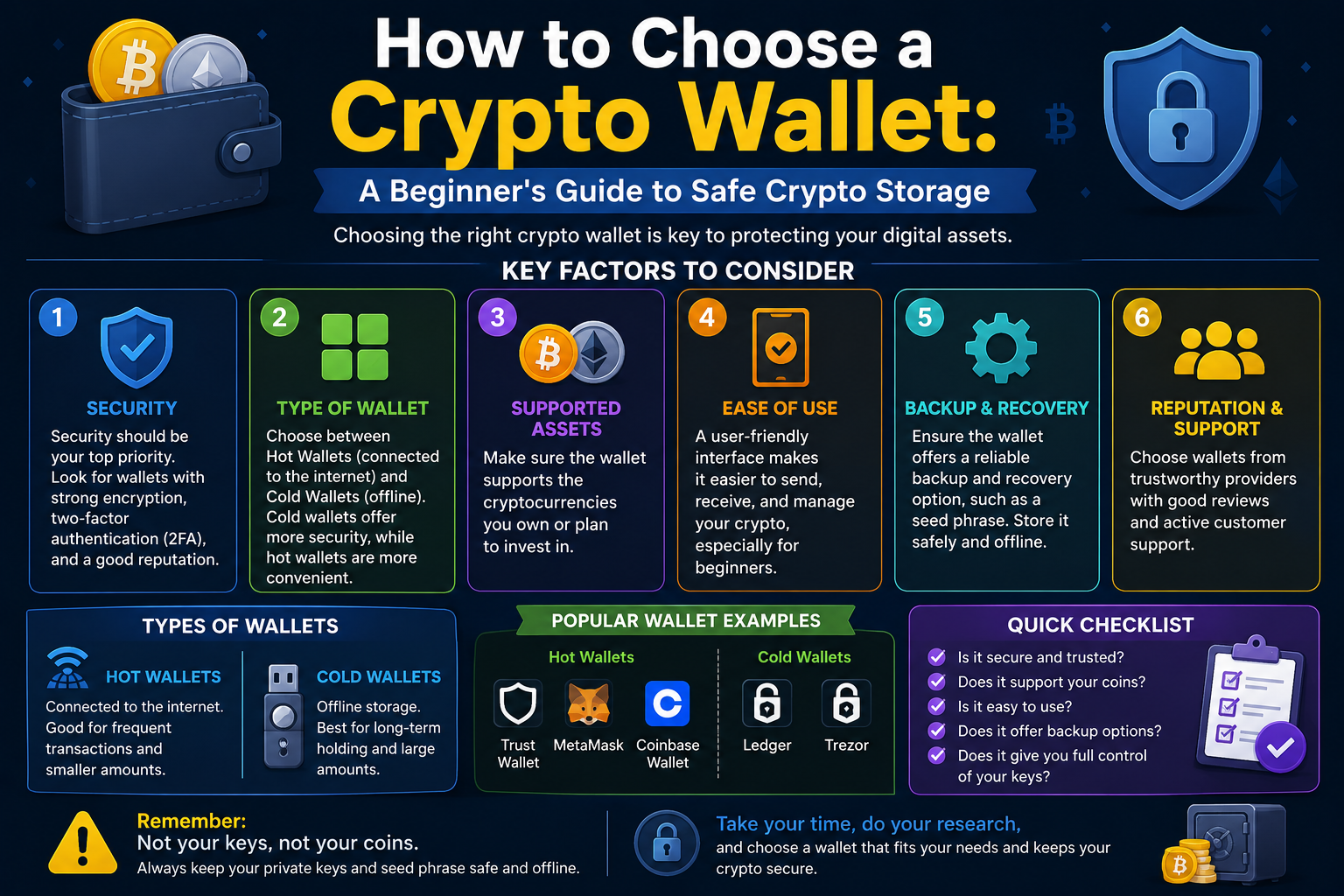
How to Choose a Crypto Wallet: A Beginner's Guide to Safe Crypto Storage
Choosing a crypto wallet is an important step for anyone who wants to use or earn cryptocurrency. A wallet helps you manage your crypto, receive rewards, send coins and interact with different blockchain services.
For beginners, however, choosing the right wallet can be confusing. There are many types of wallets, and each one offers different features and security options.
This guide explains what to look for when choosing a crypto wallet and how to keep your cryptocurrency safer.
What Is a Crypto Wallet?
A crypto wallet is a tool that allows you to manage your cryptocurrency.
Unlike a traditional wallet that physically holds money, a crypto wallet does not actually store coins inside the wallet. Your cryptocurrency remains recorded on the blockchain, while the wallet gives you the tools and credentials needed to access and manage it.
A wallet normally works with a public address and a private key or recovery phrase.
Your public address can usually be shared when someone wants to send cryptocurrency to you.
Your private key or recovery phrase is different. It should be kept private because anyone who obtains it may be able to access your funds.
Why Choosing the Right Wallet Matters
Different users have different needs.
Someone who only receives small crypto rewards may prefer a simple mobile wallet, while someone holding cryptocurrency for a long period may prefer stronger security through a hardware wallet.
When choosing a wallet, consider:
Security
Supported cryptocurrencies
Ease of use
Backup and recovery options
Device compatibility
Transaction fees
Reputation of the wallet provider
The best wallet is not necessarily the one with the most features. It is the one that matches your needs while allowing you to manage your funds securely.
Hot Wallets vs Cold Wallets
Crypto wallets are commonly divided into two broad categories: hot wallets and cold wallets.
Hot wallets are connected to the internet. Examples include mobile wallets, browser wallets and desktop wallets.
They are convenient because you can quickly access your cryptocurrency and use it with online services.
Cold wallets keep the wallet's private keys offline. Hardware wallets are a common example.
Cold storage can provide stronger protection against certain online threats and is often considered for storing larger amounts of cryptocurrency for longer periods.
What Beginners Should Look For
If you are new to cryptocurrency, simplicity is important.
Choose a wallet that has a clear interface and provides reliable backup and recovery instructions.
Before depositing funds, check whether the wallet supports the cryptocurrency and network you intend to use.
For example, sending a token through the wrong network can result in funds becoming difficult or impossible to recover.
Always verify the receiving address and network before confirming a transaction.
Protect Your Recovery Phrase
One of the most important rules of crypto security is protecting your recovery phrase.
Your recovery phrase can be used to restore access to a wallet. If someone gets it, they may be able to control the funds associated with that wallet.
Never:
Share your recovery phrase with another person
Send it through email or chat
Enter it into an unknown website
Store it in a public document
Give it to someone claiming to be wallet support
A legitimate support representative should not need your recovery phrase to access your funds.
Be Careful With Fake Wallets
Scammers sometimes create websites, applications or browser extensions that look similar to legitimate crypto wallets.
Before installing a wallet, verify that you are using the official source.
Be especially careful with advertisements, unsolicited messages and links received through social media.
A fake wallet can potentially steal private keys or recovery information.
Check the Network Before Sending Crypto
One common mistake among beginners is ignoring the blockchain network.
Some cryptocurrencies and tokens can operate on multiple networks. The sender and receiver need to use a compatible network.
Before making a transaction, check:
The cryptocurrency
The receiving address
The network
The amount
The transaction fee
For larger transactions, it can also be sensible to send a small test amount first when appropriate.
Don't Keep Everything in One Place
For users who manage larger amounts of cryptocurrency, separating funds can reduce risk.
For example, everyday transactions can use a convenient wallet, while long-term holdings can be kept in a more security-focused setup.
The exact approach depends on how much cryptocurrency you hold and how frequently you use it.
What About Crypto Faucet Rewards?
If you use cryptocurrency faucets or other reward platforms, you may receive small amounts of cryptocurrency regularly.
Before withdrawing rewards, make sure your wallet supports the particular cryptocurrency and network used by the platform.
Also check the withdrawal address carefully before submitting a transaction.
Small rewards can still be valuable over time, so good wallet security is important even when the amount is initially small.
Common Crypto Wallet Mistakes
Beginners often make avoidable mistakes.
Some of the most common include:
Losing the recovery phrase
Sharing private wallet information
Using unofficial wallet applications
Sending funds to the wrong address
Selecting the wrong blockchain network
Clicking suspicious wallet links
Signing unknown transactions
Keeping large amounts in an insecure wallet
Learning basic security practices before storing cryptocurrency can prevent many problems.
Final Thoughts
Choosing a crypto wallet does not have to be complicated.
Start by understanding your needs, check which cryptocurrencies and networks you use, and choose a wallet from a trustworthy source.
Most importantly, protect your recovery phrase and private keys. Your wallet security ultimately depends heavily on how carefully you protect these credentials.
Whether you are earning cryptocurrency through faucets, receiving rewards or simply holding crypto, learning basic wallet security is one of the most useful skills for any beginner.