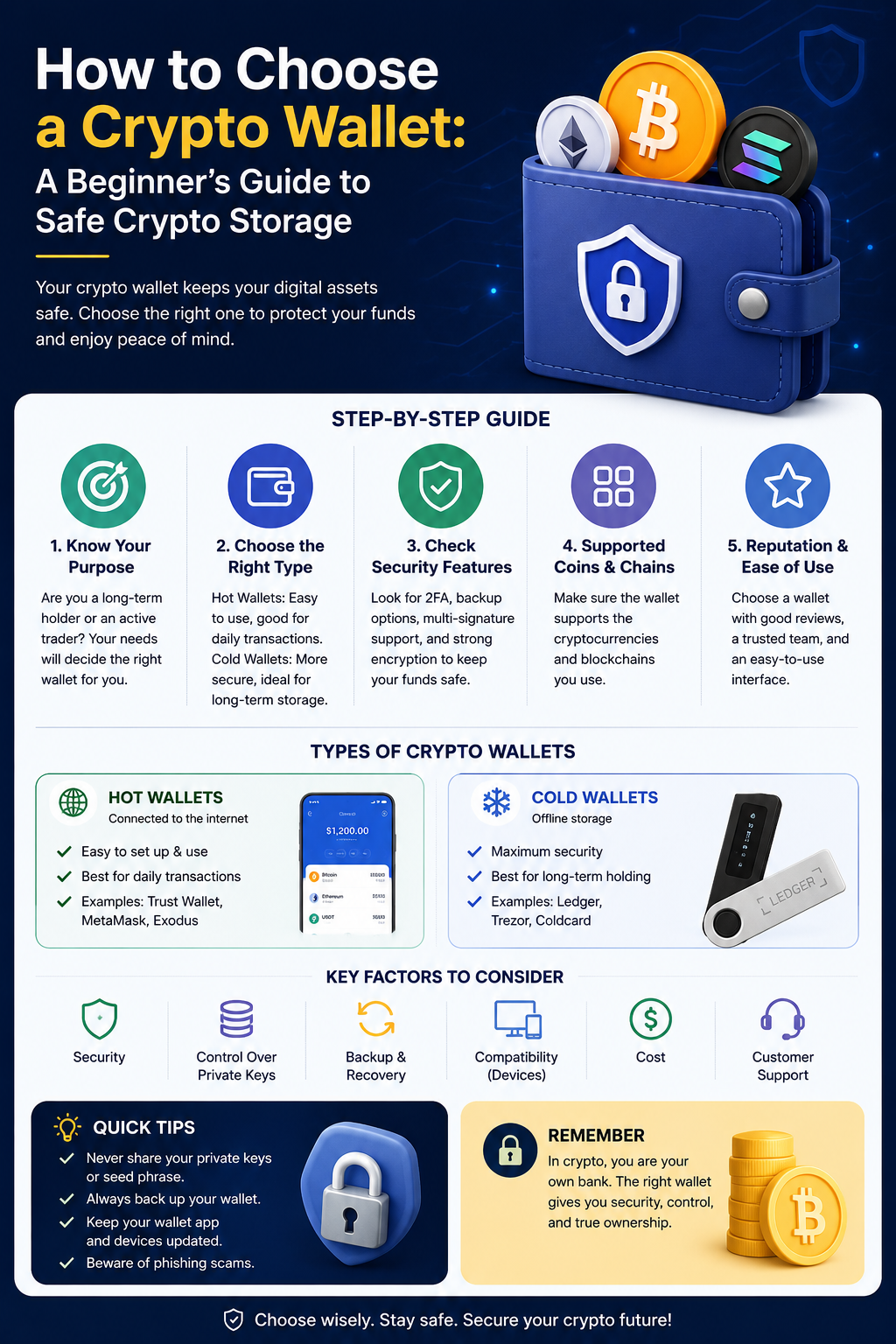
How to Choose a Crypto Wallet: A Beginner’s Guide to Safe Crypto Storage
If you are starting with cryptocurrency, one of the first things you will hear about is a crypto wallet.
A wallet is an important part of using cryptocurrency because it allows you to manage your digital assets and interact with blockchain networks. But choosing the right wallet can be confusing for beginners because there are many different types available.
Some wallets are designed for convenience, while others focus more on security and long-term storage.
In this guide, you will learn how crypto wallets work, the main types of wallets, and the most important things to consider before choosing one.
What Is a Crypto Wallet?
A cryptocurrency wallet is a tool that allows you to manage your crypto assets and interact with a blockchain.
Unlike a traditional wallet, a crypto wallet does not simply hold physical coins.
Instead, it generally manages the private keys or other credentials that allow you to control cryptocurrency associated with blockchain addresses.
Depending on the wallet, it may allow you to:
Receive cryptocurrency
Send cryptocurrency
Check balances
View transaction history
Connect to crypto applications
Manage different digital assets
The exact features depend on the wallet and blockchain it supports.
How Does a Crypto Wallet Work?
When you create a crypto wallet, it typically generates cryptographic information that allows you to control your blockchain assets.
You may receive a public wallet address that can be shared when someone wants to send you cryptocurrency.
You also have private information that must be kept secret.
A simple way to understand it is:
Public address = can be shared to receive crypto
Private key or recovery phrase = must be kept secret
If someone gains access to your private key or recovery phrase, they may be able to control your cryptocurrency.
What Is a Wallet Address?
A wallet address is a blockchain address used to receive cryptocurrency.
It can look like a long combination of letters and numbers.
When someone wants to send you crypto, you normally provide the appropriate receiving address.
Always check that the address belongs to the correct blockchain and asset before sending funds.
A transaction sent to the wrong address or network may be difficult or impossible to recover.
What Is a Recovery Phrase?
Many self-custody wallets provide a recovery phrase when the wallet is created.
This phrase can be used to restore access to the wallet if the original device is lost or damaged.
The recovery phrase is extremely important.
You should:
Keep it private
Store it somewhere secure
Never send it through chat
Never post it online
Never enter it into an unknown website
Never share it with someone claiming to be wallet support
A legitimate support representative should not need your recovery phrase to "unlock" your funds.
Types of Crypto Wallets
There are several common types of cryptocurrency wallets.
The two broad categories beginners should understand are hot wallets and cold wallets.
Hot Wallets
A hot wallet is connected to the internet.
Examples can include:
Mobile wallets
Browser wallets
Desktop wallets
Web-based wallets
Hot wallets are generally convenient for frequent transactions and interacting with blockchain applications.
However, because they are connected to an internet-connected device, users need to pay close attention to security.
Cold Wallets
Cold wallets are designed to keep private keys offline when they are not being used.
Hardware wallets are a common example.
Cold storage can be useful for people who want to keep cryptocurrency for longer periods and reduce exposure to online threats.
However, cold wallets also require careful management.
Losing access to the device and recovery information can create serious problems.
Hot Wallet vs Cold Wallet
The best choice depends on how you plan to use cryptocurrency.
A hot wallet may be suitable when:
You make frequent transactions
You use decentralized applications
You need quick access to funds
You are managing a smaller amount for regular activity
A cold wallet may be more suitable when:
You hold crypto for the long term
You want to keep important assets offline
You do not need frequent access
Security is more important than convenience
Some users choose to use both.
For example, they may keep a smaller amount in a hot wallet for everyday activity while storing long-term holdings separately.
How to Choose a Crypto Wallet
Before selecting a wallet, consider the following factors.
1. Supported Cryptocurrencies
Not every wallet supports every cryptocurrency.
Before creating a wallet, check whether it supports the specific cryptocurrency and blockchain network you intend to use.
This is especially important when dealing with tokens that can exist on multiple networks.
2. Security Features
Look for important security features such as:
PIN protection
Password protection
Backup and recovery options
Two-factor authentication where applicable
Device security
Transaction confirmation features
Security features can vary considerably between wallets.
3. Ease of Use
A wallet may have excellent security features but still be difficult for beginners.
Choose something you can understand and use correctly.
A simple interface can reduce mistakes when sending or receiving cryptocurrency.
4. Backup Options
Check how the wallet allows you to recover your account or assets if you lose access to your device.
Understand the backup process before depositing significant funds.
5. Network Compatibility
Always make sure the wallet supports the blockchain network you need.
For example, a token may be available on more than one network, but the receiving wallet or service may only support a specific network.
Common Crypto Wallet Mistakes
Beginners often make avoidable mistakes when using crypto wallets.
Sending to the Wrong Address
Cryptocurrency transactions can be difficult to reverse.
Always carefully check the receiving address before confirming a transaction.
Using the Wrong Network
A token may be available on several networks.
Sending through an unsupported network can result in funds becoming difficult to access.
Sharing a Recovery Phrase
Never share your recovery phrase with anyone.
If someone asks for it, treat the request as a serious warning sign.
Downloading Fake Wallet Apps
Scammers may create fake applications that look similar to legitimate wallets.
Only download wallet software from trusted and verified sources.
Keeping Everything in One Place
Some users prefer to separate funds according to their purpose.
For example, they may use one wallet for everyday transactions and another method for long-term storage.
How to Keep Your Crypto Wallet Safe
Wallet security is not only about choosing good software or hardware.
Your own habits are also important.
Use these basic practices:
Keep your recovery phrase offline and private.
Use strong passwords where applicable.
Enable additional security features when available.
Keep your device and wallet software updated.
Avoid clicking suspicious crypto links.
Double-check addresses before sending funds.
Never trust unexpected messages asking for wallet access.
Start with small transactions when testing a new wallet or network.
These simple habits can significantly reduce common security risks.
Should Beginners Use a Crypto Wallet?
If you plan to own or use cryptocurrency, learning how wallets work is useful.
However, you should not rush to move large amounts of cryptocurrency into a wallet you do not understand.
Start by learning:
How addresses work
How transactions work
What private keys are
What recovery phrases are
How network fees work
How to verify a transaction
Once you understand these basics, managing cryptocurrency becomes much easier.
What Wallet Is Best for You?
There is no single crypto wallet that is perfect for everyone.
A person who makes frequent small transactions may prefer convenience and quick access.
Someone holding cryptocurrency for a long period may place more importance on offline security.
Your choice should depend on:
How much crypto you manage
How often you transact
Which cryptocurrencies you use
Which networks you need
Your security requirements
Your technical experience
The most important thing is not simply choosing a popular wallet. It is understanding how the wallet works and protecting your access information.
Final Thoughts
A crypto wallet is an essential tool for managing cryptocurrency, but using one safely requires some basic knowledge.
The most important rule for beginners is simple:
Protect your private keys and recovery phrase, and always verify the address and network before sending cryptocurrency.
Start slowly, learn how transactions work, and test new wallets or networks with small amounts before using larger balances.
With the right security habits, a crypto wallet can make managing digital assets much easier and more convenient.