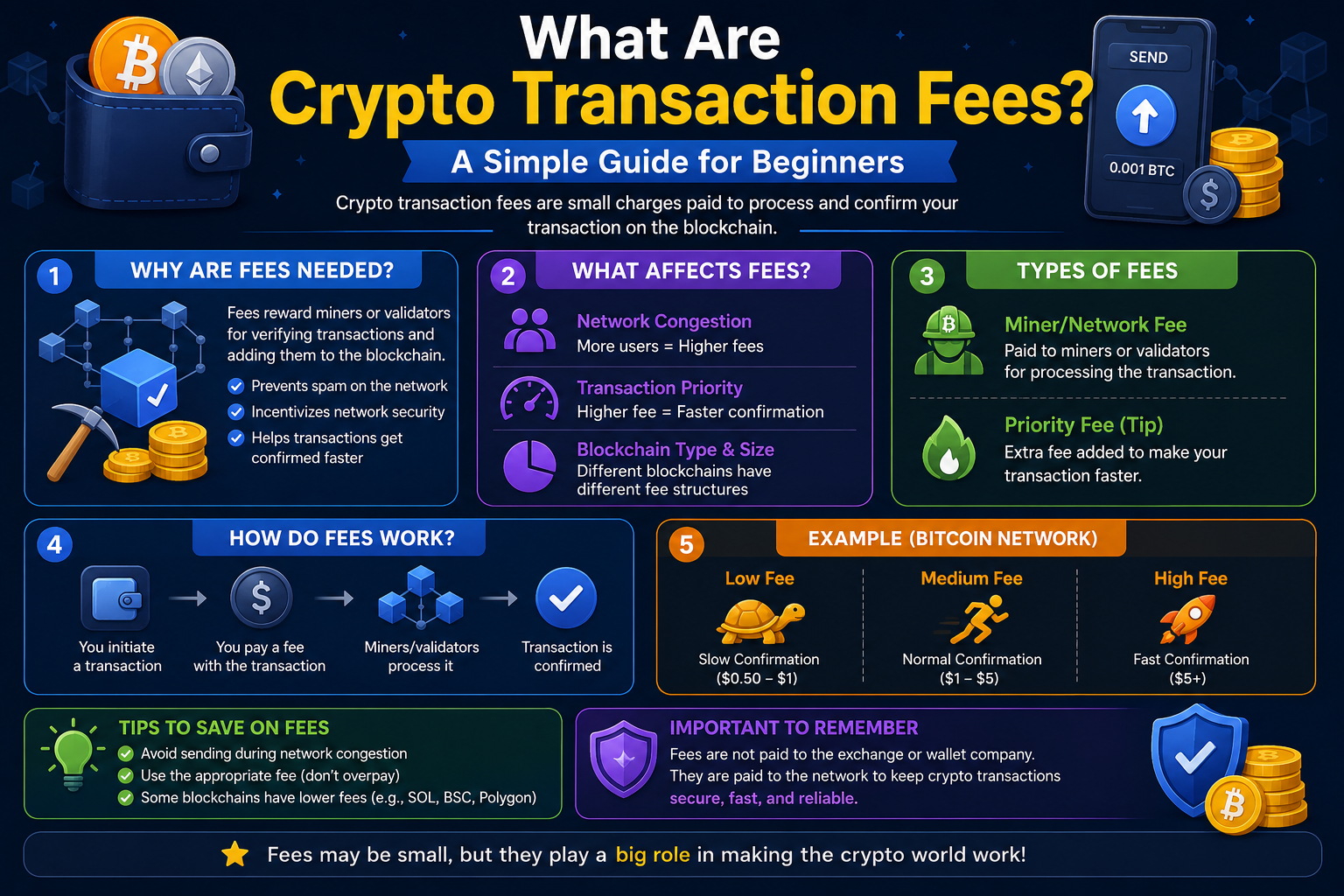
What Are Crypto Transaction Fees? A Simple Guide for Beginners
If you are new to cryptocurrency, you may notice that sending crypto usually requires a small transaction fee. This fee can sometimes be confusing, especially when the amount changes from one transaction to another.
Understanding crypto transaction fees can help you avoid mistakes and choose the right time and network for your transactions.
What Is a Crypto Transaction Fee?
A crypto transaction fee is a small amount paid when a transaction is processed on a blockchain network.
When you send cryptocurrency, the transaction needs to be verified and recorded on the blockchain. The fee helps compensate the network participants who process and secure transactions.
The exact fee depends on the cryptocurrency and blockchain network being used.
Why Do Crypto Fees Exist?
Blockchains need a mechanism to process transactions and protect the network from spam and abuse.
Transaction fees can help:
Process transactions
Compensate network participants
Reduce spam transactions
Support network security
Prioritize transactions when network activity is high
Different blockchains use different systems, so fees can work differently from one network to another.
Why Do Crypto Fees Change?
Crypto transaction fees are not always fixed.
One major factor is network activity.
When many people are trying to use a blockchain at the same time, demand for transaction processing can increase. This can result in higher fees on some networks.
When network activity decreases, fees may become lower.
This is why the same type of transaction can sometimes cost more at one time than another.
Are Crypto Fees the Same for Every Cryptocurrency?
No.
Different cryptocurrencies use different blockchain networks, and each network has its own method for processing transactions.
For example, the fee structure of one blockchain may be very different from another.
Some networks are designed to provide very low-cost transactions, while others may have higher fees depending on network conditions.
Always check the network and estimated fee before confirming a transaction.
What Is a Network Fee?
You may see terms such as network fee, transaction fee, or gas fee.
These terms can refer to the cost associated with processing a blockchain transaction, although the exact meaning depends on the network.
Some blockchain ecosystems commonly use the term "gas" to describe the computational cost of transactions and smart-contract operations.
Why Is My Fee Higher Than Expected?
There are several possible reasons.
The network may currently be busy, or the transaction may require more processing than a simple transfer.
Fees can also differ depending on the wallet or service you are using.
If you are interacting with a decentralized application or smart contract, the required network fee may be different from a basic cryptocurrency transfer.
How Can Beginners Reduce Crypto Fees?
You cannot always control the network fee, but you can avoid unnecessary costs.
Before sending crypto:
Check the current network fee.
Confirm that you are using the correct network.
Compare supported networks when the asset is available on multiple networks.
Avoid making unnecessary small transactions when fees would consume a large percentage of the amount.
Check the wallet's estimated fee before confirming.
Make sure the receiving address supports the selected network.
Never choose a network simply because its fee appears lower. The receiving service must support that network.
Be Careful With Small Crypto Rewards
If you earn cryptocurrency through faucets, rewards, promotions or other platforms, transaction fees are especially important.
For example, if you receive a small amount of crypto but the withdrawal fee is relatively high, withdrawing immediately may not be efficient.
Check the platform's minimum withdrawal amount and withdrawal fee before requesting a payout.
This can help you understand the actual amount you will receive.
What Is a Gas Fee?
On some blockchain networks, transactions and smart-contract operations require a fee commonly called a gas fee.
Gas can be required for activities such as:
Sending tokens
Using decentralized applications
Swapping tokens
Interacting with smart contracts
The amount can change depending on network conditions and the complexity of the operation.
Can a Crypto Transaction Be Free?
Some cryptocurrency services may advertise free transfers or zero-fee transactions.
However, "free" does not necessarily mean that the underlying blockchain has no cost.
A platform may pay the network fee on behalf of its users, include the cost elsewhere, or use its own internal transfer system.
Always check the service's fee structure before assuming a transaction is completely free.
Always Check Before You Confirm
Blockchain transactions are often difficult or impossible to reverse once they have been confirmed.
Before clicking the final confirmation button, check:
Wallet address
Cryptocurrency
Network
Amount
Transaction fee
Total amount being sent
Taking a few seconds to verify these details can prevent expensive mistakes.
Final Thoughts
Crypto transaction fees are a normal part of using many blockchain networks.
The amount you pay can depend on the network, current activity, transaction type and the service or wallet you use.
For beginners, the most important habit is simple: always check the network and fee before confirming a transaction.
If you regularly earn or receive cryptocurrency, understanding transaction fees can also help you decide when and how to move your funds more efficiently.