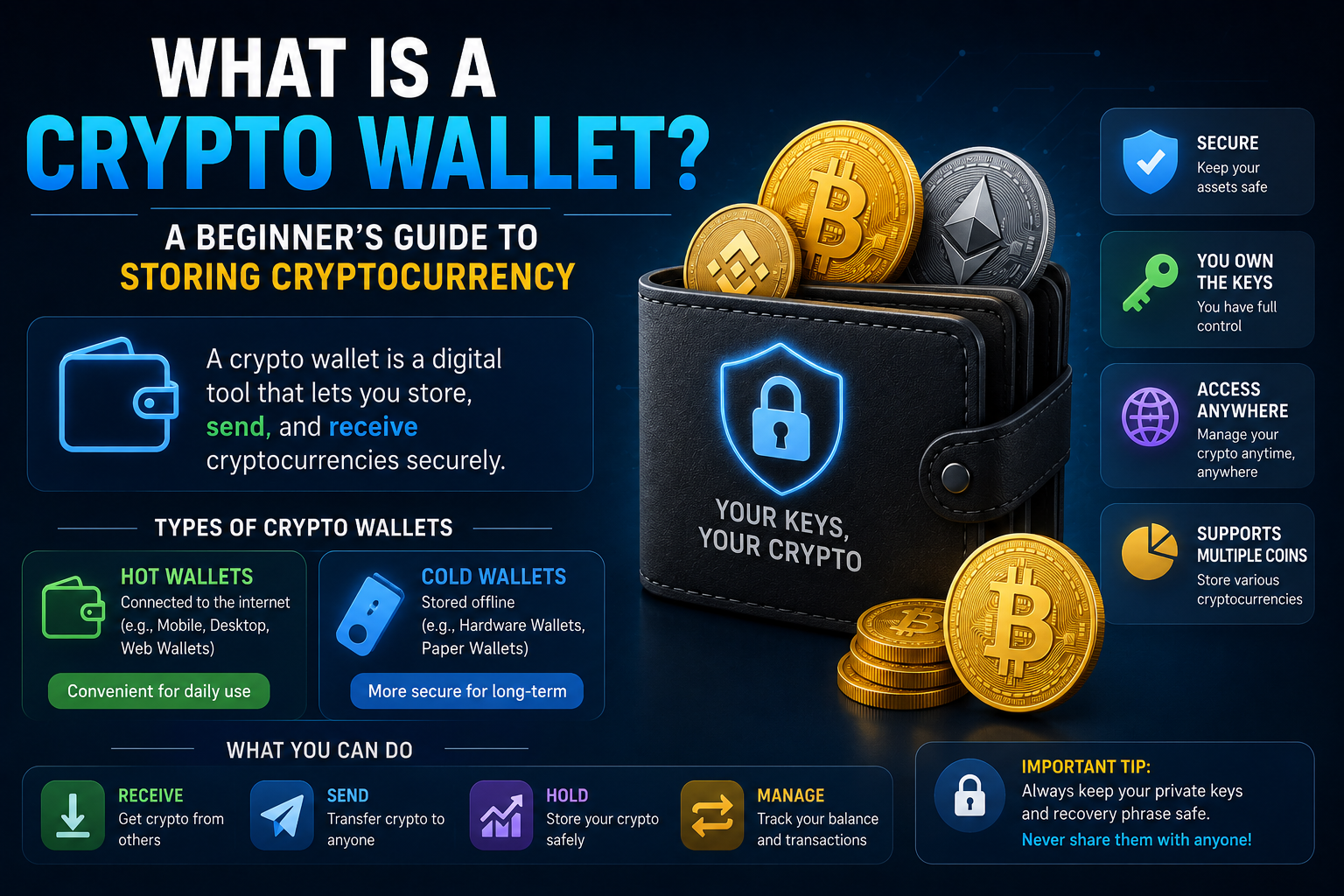
What Is a Crypto Wallet? A Beginner’s Guide to Storing Cryptocurrency
If you are new to cryptocurrency, one of the first things you will hear about is a crypto wallet.
Whether you receive cryptocurrency from a faucet, buy crypto, send a payment, or simply want to learn how digital assets work, understanding wallets is an important part of using cryptocurrency safely.
A crypto wallet does not work exactly like a traditional bank account. Instead, it provides the tools needed to interact with cryptocurrency networks and manage access to your digital assets.
In this beginner-friendly guide, we will explain what a crypto wallet is, how it works, the different types of wallets, and what you should know before using one.
What Is a Crypto Wallet?
A crypto wallet is a tool that allows you to manage your cryptocurrency and interact with blockchain networks.
Depending on the wallet, you may be able to:
Receive cryptocurrency
Send cryptocurrency
View your balance
Manage different digital assets
Connect to blockchain applications
Check transaction activity
Your cryptocurrency itself is recorded on a blockchain. The wallet provides the information and security tools needed to access and manage your assets.
How Does a Crypto Wallet Work?
A crypto wallet uses cryptographic keys to allow you to control your cryptocurrency.
The two important concepts beginners should understand are:
Public address
A public address can be shared with someone who wants to send cryptocurrency to you.
Private key
A private key is used to authorize transactions and should be kept secret.
Some wallets also use a recovery phrase, sometimes called a seed phrase, which can be used to restore access to a wallet.
The recovery phrase is extremely sensitive and should never be shared with another person or entered into an unknown website.
What Is a Crypto Wallet Address?
A wallet address is similar to a destination for receiving cryptocurrency.
When someone wants to send you crypto, you normally provide the appropriate receiving address.
However, addresses are connected to particular cryptocurrencies and networks, so you should always make sure the sender is using the correct network.
For example, before receiving funds, check:
Cryptocurrency → Network → Receiving address
Do not assume that every address works with every cryptocurrency.
What Is a Private Key?
A private key is a secret piece of information that helps prove control over cryptocurrency associated with a wallet.
It should never be posted publicly or shared with websites, strangers, or support agents.
If another person obtains your private key, they may be able to control the assets associated with it.
For this reason, protecting private keys and recovery phrases is one of the most important parts of cryptocurrency security.
What Is a Recovery Phrase?
Many self-custody wallets provide a recovery phrase when the wallet is created.
It may consist of a series of words that can be used to restore the wallet.
Think of the recovery phrase as a master backup for the wallet.
If you use a self-custody wallet, keep the recovery phrase somewhere secure and private.
Never:
Send it through chat
Upload it to a website
Take unnecessary screenshots of it
Store it in a public document
Share it with someone claiming to be support
A legitimate service should not need your recovery phrase simply to send cryptocurrency to you.
Types of Crypto Wallets
There are several types of cryptocurrency wallets.
The two broad categories beginners should know are hot wallets and cold wallets.
Hot Wallets
Hot wallets are connected to the internet.
Examples can include:
Mobile wallets
Desktop wallets
Browser-based wallets
They are generally convenient for everyday transactions and interacting with blockchain applications.
However, because they are connected to the internet, users should pay close attention to security.
Cold Wallets
Cold wallets are designed to keep private keys offline when they are not being used.
Hardware wallets are a common example.
They can provide an additional layer of protection for people who want to store cryptocurrency for longer periods.
However, using a cold wallet does not remove the need for good security practices.
Custodial vs Self-Custody Wallets
Another important difference is who controls the private keys.
Custodial Wallet
With a custodial service, another company or platform manages the private keys on your behalf.
This can make the experience easier for beginners, but you are relying on that service to protect and provide access to your assets.
Self-Custody Wallet
With a self-custody wallet, you control the private keys or recovery information.
This gives you greater direct control, but it also means you are responsible for protecting your wallet credentials.
If you lose access to your recovery information, recovering the wallet may be difficult or impossible.
Which Crypto Wallet Is Best for Beginners?
There is no single wallet that is best for everyone.
Your choice depends on what you want to do.
If you only want to receive small cryptocurrency rewards, convenience may be important.
If you plan to hold cryptocurrency for a longer period, security and self-custody may become more important.
Before choosing a wallet, consider:
Supported cryptocurrencies
Supported networks
Security features
Ease of use
Backup and recovery options
Transaction fees
Device compatibility
Always use the official source when downloading wallet software.
How to Receive Cryptocurrency in a Wallet
The basic process is simple.
Step 1: Open Your Wallet
Open your wallet and select the cryptocurrency you want to receive.
Step 2: Select Receive
Choose the Receive option.
Your wallet should display a receiving address.
Step 3: Copy the Address
Copy the address carefully.
Avoid typing it manually whenever possible.
Step 4: Check the Network
Make sure the sender and your wallet are using the same supported network.
Step 5: Send or Request the Payment
Provide the receiving address to the sender or enter it in the platform where you are withdrawing cryptocurrency.
After the transaction is processed and confirmed, the funds should appear in your wallet.
How to Send Cryptocurrency
Sending cryptocurrency requires even more care.
Usually, you need to enter:
Receiving address
Amount
Network
Transaction fee
Before confirming the transaction, check the receiving address and network carefully.
A blockchain transaction may not be reversible after it has been confirmed.
For larger amounts, some users prefer to send a small test transaction first when practical.
Common Crypto Wallet Mistakes
Beginners often make avoidable mistakes.
Sharing the Recovery Phrase
Never share your recovery phrase.
Using the Wrong Network
Always verify the network before sending or receiving funds.
Downloading Fake Wallet Software
Only download wallet applications from trusted official sources.
Clicking Unknown Links
Be careful with links received through messages, advertisements, social media, or email.
A fake website may attempt to steal your wallet information.
Sending to the Wrong Address
Always double-check the destination before confirming a transaction.
Is a Crypto Wallet Safe?
A wallet can be secure when it is used correctly, but security also depends heavily on the user.
Keep your software updated, use strong account security where available, protect your recovery information, and be careful about websites and applications you connect to.
Remember that cryptocurrency transactions are generally designed to operate without a traditional bank reversing a payment for you.
That makes checking transaction details before sending especially important.
Crypto Wallet vs Bank Account
A crypto wallet and a traditional bank account are not the same.
A bank account is managed through a financial institution, while a self-custody crypto wallet can allow you to directly control the keys associated with your cryptocurrency.
A crypto wallet also does not necessarily "store" coins in the same way a physical wallet stores cash.
The blockchain records the assets and transactions, while the wallet provides the tools needed to access and manage them.
Final Thoughts
A crypto wallet is one of the most important tools for anyone learning about cryptocurrency.
It allows users to receive, send, and manage digital assets while interacting with blockchain networks.
The most important concepts for beginners are wallet addresses, private keys, recovery phrases, and blockchain networks.
If you remember only one rule, remember this:
Never share your private key or recovery phrase with anyone.
Take your time when sending cryptocurrency, verify the address and network, and use trusted wallet software.
Once you understand how wallets work, many other parts of cryptocurrency—including faucet withdrawals, transactions, and network fees—become much easier to understand.